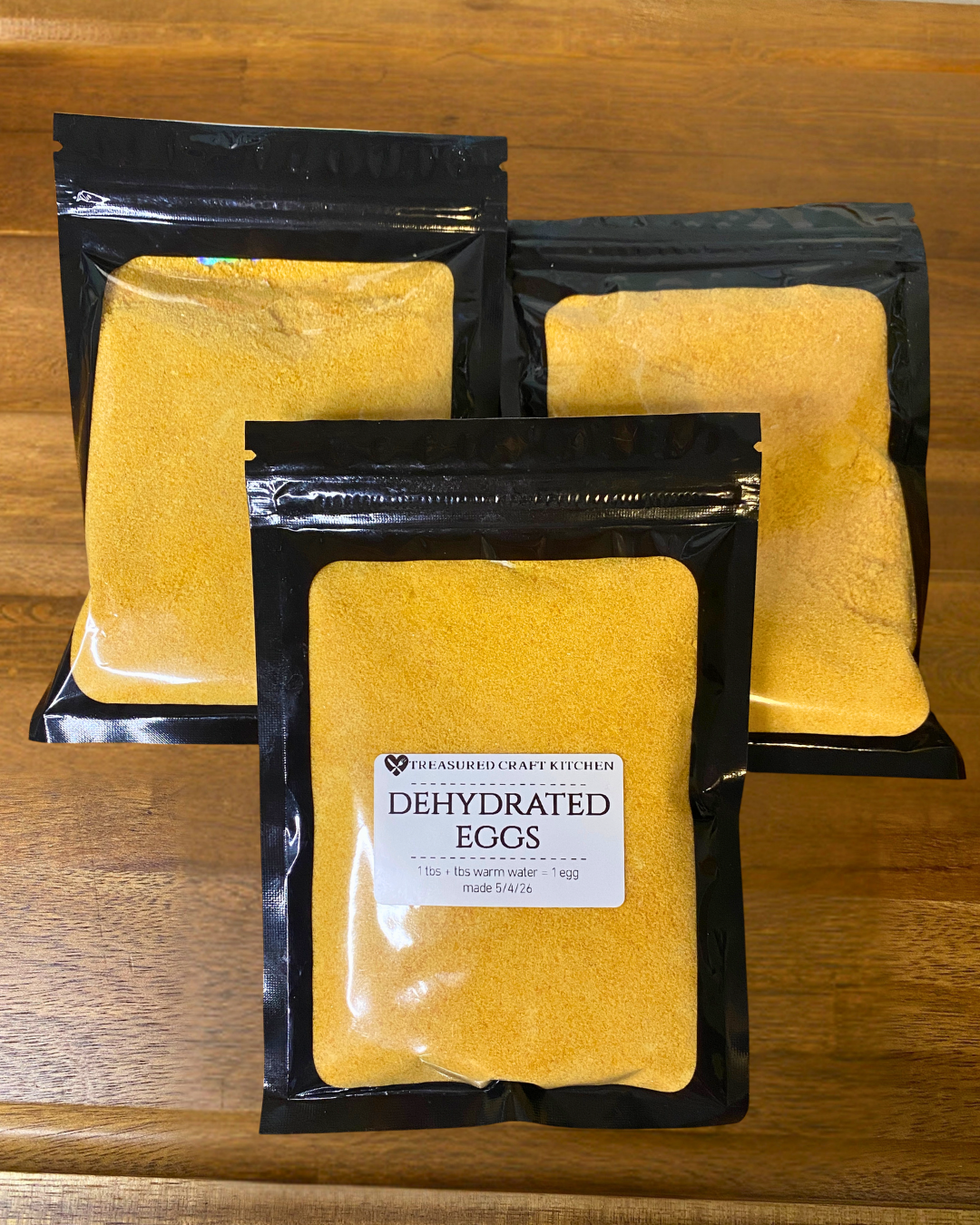
This homemade egg powder recipe shows you how to dehydrate eggs using a dehydrator and silicone trays. You scramble the eggs, dry them until brittle, and blend them into a powder. One batch uses 24 eggs.
Rehydrate the powder with warm water and use it for scrambled eggs or egg wash. It’s an easy way to save extra eggs and keep eggs on hand when your hens slow down.
Why Dehydrate Eggs at Home?
Eggs don’t last forever in the fridge, and supply isn’t always steady. Dehydrating gives you eggs on your own schedule.
- Use up extra eggs: Preserve a surplus before it goes to waste. Did you know spring eggs are more nutritious than winter eggs?
- Eggs when hens slow down: Laying often slows with weather and season. Powder keeps eggs in your pantry.
- Know your source: Use eggs from your own hens or a local farm.
- Cost savings: Reduce the overall cost of eggs throughout the year by purchasing in bulk during peak sale times
- Less space: Powder takes up far less room than cartons of eggs. lightweight and great for backpacking or camping!
- Shelf stable protein: Iin the event of an emergency, these powdered eggs are easy to reheat over a fire, or grill – no electricity required!

How to Dehydrate Eggs
- Scramble and Fill Trays: Crack 24 eggs into a bowl and scramble until combined. Ladle evenly into silicone trays. 24 eggs filled 4 trays.
- Dehydrate: Dehydrate at 135°F for 10 hours. The eggs are fully dry when they are brittle.
- Blot: using a paper towel, blot excess oils off of the dried egg. Oils separate from the liquid and will sit on top as the rest of moisture dries out, this is normal.
- Blend, Temper, and Store: Blend the dried eggs into a powder. Spread it thin and return it to the dehydrator. Blending warms the powder slightly, and this step removes any leftover moisture. Then store and label.
Dehydrated must be cooked – dehydrated eggs are still raw and salmonella can still be present. Cooking eliminates this safely.

How to Store Dehydrated Eggs for Long Term Use
For a full list of ingredients, be sure to reference the recipe card below!
Moisture, light, and oxygen shorten the life of egg powder. Store it dry, sealed, and out of the light.
Option 1: Mylar Bags with Oxygen Absorbers
- Fill the mylar bag with egg powder.
- Add an oxygen absorber.
- Press out the extra air and seal the bag.
- Label the bag.
Option 2: Mason Jars with Oxygen Absorbers
- Funnel the powder into a clean, dry mason jar.
- Add an oxygen absorber.
- Use a jar sealer to seal the lid.
- Label the jar.
 Buy Now →
 Buy Now →
 Buy Now →
Disclosure: As an Amazon Associate, I earn from qualifying purchases. This comes at no additional cost to you.
Keep both in a cool, dark place. Always scoop with a dry spoon.
Label Every Batch
Write the date you dehydrated the eggs on every bag and jar. A label shows how old your egg powder is, so you can use the oldest first. I use this printer by Niimbot in almost all of my videos. Use code B21TREASURE for 15% off!
 Buy Now →
Disclosure: As an Amazon Associate, I earn from qualifying purchases. This comes at no additional cost to you.
How to Rehydrate Dehydrated Eggs
Mix 1 tbsp egg powder with 2 tbsp warm water. Stir thoroughly and let it sit until the powder absorbs the water. This makes 1 egg.
- Rehydrated Scrambled Eggs: Pour the rehydrated egg into a hot, greased pan. Stir until fully cooked.
- Rehydrated Egg Wash : Brush the rehydrated egg onto pie crust, rolls, or pastry before baking.
Tip 1: The thicker you pour, the longer the eggs take to rehydrate. Use more trays if you have them for thinner layers.
Tip 2: Use a level to make sure your dehydrator sits completely flat before you add trays of liquid egg (ask me how I know!)
Food safety note: Home dehydrators may not reach the temperature that destroys salmonella in raw egg. To lower the risk, use pasteurized eggs or heat the scrambled eggs to 160°F before dehydrating. Always cook rehydrated egg fully before eating.

Recipe Suggestions
Want more from-scratch pantry staples? Try our viral Mac n Cheese Powder (700k+ views), add any noodle you like! You can also use our Homemade Chicken Bouillon to season just about anything, or stock the pantry with our Cream of Anything Dry Mix.
We’re adding new recipes weekly! Subscribe and never miss a post!


Frequently Asked Questions
Can you dehydrate raw eggs?
Yes, but raw egg in a home dehydrator may not get hot enough to destroy salmonella. The FDA has said it isn’t aware of a validated process for safely dehydrating eggs at home. To lower the risk, use pasteurized eggs or heat the scrambled eggs to 160°F first. Always cook rehydrated egg fully.
How long does dehydrated egg powder last?
Stored and sealed with an oxygen absorber in a cool, dark place, it keeps it is stored indefinitely as long as these conditions are maintained. Just like any other food, purchased or homemade, throw out powder that smells off, looks discolored, or feels damp.
How much powder equals one egg?
1 tbsp powder plus 2 tbsp warm water makes 1 egg. A batch of 24 eggs makes about 24 tbsp of powder.
Do I need oxygen absorbers?
Oxygen absorbers help keep the powder fresh in mylar bags and mason jars. Use them for long term storage
Why do you temper the powder?
Blending warms the powder slightly from the motor which can leave moisture behind. Spreading it thin in the dehydrator removes that moisture before storage.

Dehydrated Eggs Recipe Card
Print
How to Dehydrate Eggs
Dehydrate eggs into a storable powder using a dehydrator and silicone trays. Rehydrate with warm water for scrambled eggs or egg wash.
- Total Time: 10 hours 5 minutes
- Yield: 24 tbs powder 1x
Ingredients
- 24 eggs
Instructions
- Scramble 24 eggs. Ladle evenly into 4 silicone trays.
- Dehydrate at 135°F for 10 hours, until brittle.
- Blot excess oils with a paper towel.
- Blend to a powder. Spread thin and temper in the dehydrator by placing it back in for 1-2 more hours.
- Store with an oxygen absorber and dated label.
To Use
- Mix 1 tbsp powder with 2 tbsp warm water. Stir well and let sit. Scramble or use as egg wash.
Equipment
Buy Now →
Buy Now →
Buy Now →
Buy Now → Disclosure: As an Amazon Associate, I earn from qualifying purchases. This comes at no additional cost to you.
Notes
A thicker pour takes longer to rehydrate. Level your dehydrator before adding trays. Cook rehydrated egg fully before eating. Use pasteurized eggs or heat scrambled eggs to 160°F before dehydrating to lower the risk.
- Prep Time: 5 Mins.
- Cook Time: 10 hours
- Category: Appetizer, Breakfast, Dessert, Dinner
- Method: Baking
- Cuisine: American
- Diet: Dairy-Free, Gluten-Free, Keto, Paleo